Looking for a reliable jewelry manufacturer for your next collection? Sunsmerald Jewelry specializes in custom jewelry design, wholesale production, and professional manufacturing solutions for global brands, retailers, and distributors. Share your jewelry requirements with us, including product styles, materials, gemstone preferences, order quantities, and delivery expectations.
Certifications That Actually Matter in Ethical Jewelry Sourcing
A certification mark can stand for a mine-level treatment, an audited monitoring system, a personalizeds document covering one rough-diamond shipment, or bit more than membership in an industry organization, yet buyers routinely treat those really different cases as compatible.
Why should we?
My examination is blunt: Can the vendor connect the certificate to the specific lawful entity, production facility, material set, purchase document, and completed SKU being marketed?
When the response is no, I quit calling it traceability. At finest, it is a risk-management indication. At worst, it is attractive conformity.
Current events validate that uncertainty. In March 2024, new constraints on Russian diamonds called for documentary proof that imported rocks were not of Russian beginning. Reuters ultimately reported costly hold-ups in Antwerp and industry problem that beginning controls used also far downstream can make infiltration harder, as opposed to easier, to identify.
That episode revealed an uneasy truth: a ruby might get here with polished paperwork and still have an origin problem.
An Accreditation Is a Scope Declaration, Not an Ethical Decision
The first concern should never ever be, “Is this company licensed?”
Ask instead: What, specifically, was certified?
A significant certification has boundaries:
A called lawful entity
One or more audited facilities
Particular materials, such as gold, silver, platinum or laboratory-grown rubies
A specified requirement and version
A legitimacy duration
Tasks such as refining, reducing, making or retailing
Exclusions that may quietly remove subcontractors or facilities from scope
This sounds evident. It is not.
A precious jewelry group may hold qualification at its headquarters while contracting out spreading, plating, rock setup or brightening to facilities outside the certification. A maker may pass a company-level liable organization audit without preserving licensed chain-of-custody documentation for the gold going into a certain production run.
And a merchant might make use of one properly sourced collection to sustain broad brand name messaging that consumers reasonably interpret as putting on everything.
That is where liable precious jewelry certification becomes susceptible to overstatement.
RJC Accreditation: A Useful Standard, Not an Item Key
The Accountable Jewelry Council runs numerous standards, and customers need to quit collapsing them right into the single expression “RJC accredited.”
The RJC Code of Practices, or police, examines business systems covering organization ethics, human rights, labor, environmental efficiency and sourcing controls. Police officer accreditation is compulsory for industrial RJC members.
The RJC Chain of Custodianship, or CoC, is different. It is a volunteer system planned to preserve auditable flows of eligible gold, silver and platinum-group steels through certified entities.
That difference is huge.
At the end of 2023, RJC reported 1,319 COP-certified members however only 356 CoC-certified members. In other words, there were about 27 CoC qualifications for each 100 police officer qualifications reported– not proof that the various other companies acted irresponsibly, but clear proof that firm accreditation and traceable material qualification were far from associated.
My judgment is uncomplicated:
RJC police officer is a qualified supplier-screening standard. RJC CoC is the more useful evidence when a vendor makes a traceability insurance claim regarding precious metal.
Also CoC needs evaluation. Purchasers need to validate the eligible-material statement, transfer record, steel type, certified entity and appropriate centers. RJC’s very own advice clarifies that the chain starts with an eligible-material affirmation and succeeding transfer paperwork.
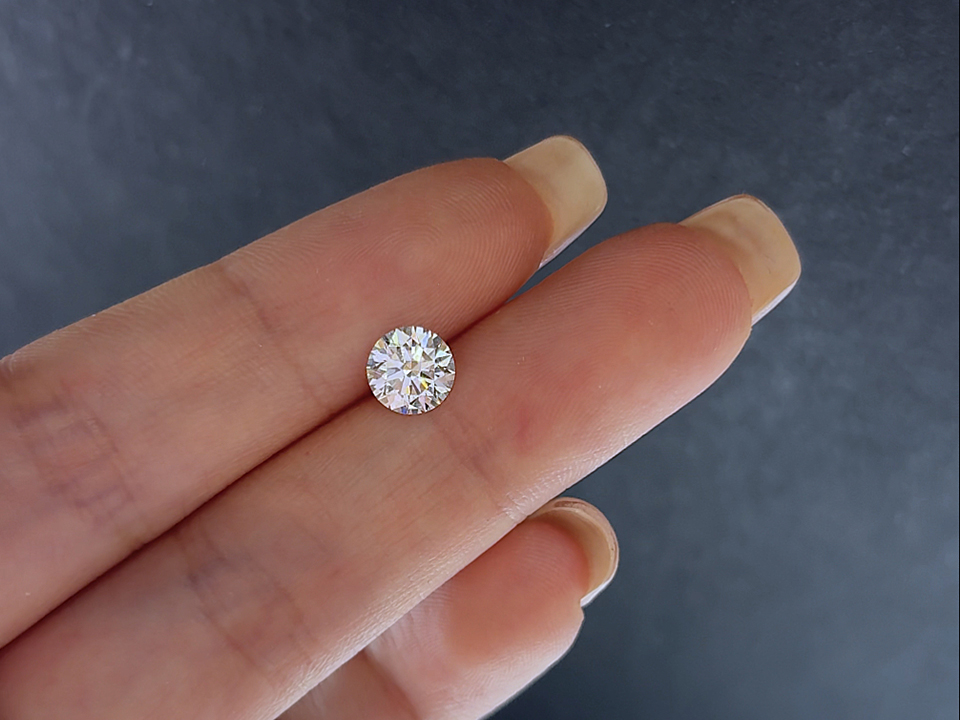
Consider a finished item such as a lab-grown oval diamond gold interaction ring. One certification may put on the ruby manufacturer, one more to the gold refiner and one more to the supplier. The item becomes defensible only when those documents can be mapped to the materials and manufacturing route behind that certain ring.
The changed RJC 2024 COP and CoC standards came to be reliable on January 1, 2025. From January 2026, brand-new audits typically can no longer be performed versus the older 2019 COP and 2017 CoC variations, besides defined transitional tasks.
So inspect the variation. Old certificates do not come to be deceptive over night, yet out-of-date scopes and transitional regulations should have scrutiny.
Fairmined Gold Certification: The Strongest Miner-Level Signal
Fairmined is just one of minority lasting precious jewelry certifications made around the facts of artisanal and small-scale mining rather than just bookkeeping a downstream workplace.
Its basic addresses legal and formal mining, labor problems, environmental controls, traceability and social growth sustained by the Fairmined Costs.
This matters because artisanal and small-scale mining is not a minimal problem that luxury brand names can resolve by avoiding it. It supports incomes while also presenting serious risks involving informal employment, risky conditions, mercury usage, contraband and weak state oversight.
Fairmined tries to enhance that system rather than acting it does not exist.
By 2023, Fairmined reported that qualification had actually brought about 1.7 statistics tonnes of certified gold to market given that 2014, sustained greater than 3,000 miners and generated over US$ 7 million in costs for qualified mining organizations.
Those numbers are moderate beside international gold flows.
That is the point.
A high-integrity system working with difficult, spread mining areas will rarely scale as swiftly as a business membership program. Scarcity does not prove high quality, yet immediate international schedule ought to make a hesitant customer ask what has been diluted.
Fairmined is best when the vendor can give:
The licensed mining company
The certified distributor
Physical or recorded chain-of-custody documents
The amount acquired
The costs paid
The item or collection getting that gold
A generic declaration that a brand name “supports Fairmined concepts” is not the like selling precious jewelry containing recorded Fairmined gold.
Fairtrade Gold additionally focuses on artisanal and small-scale mining organizations, combining social, financial and ecological requirements with a defined costs.
The premium is abnormally concrete: Fairtrade specifies that qualified mines get US$ 2,000 per kilogram of gold in addition to the agreed list prices. Mining cooperatives choose just how those funds are made use of, including functional enhancements, water systems, schools and health solutions.
Uniqueness gains trust fund.
“Returning” is marketing language. “US$ 2,000 per kg paid to a named qualified organization” is an auditable case.
But the acquainted caution still applies: validate whether the seller acquired licensed Fairtrade Gold for the item, collection or bookkeeping period being promoted. Certification at the mine does not instantly follow the steel via every refiner, alloying operation, wheel and maker.
I prefer to see one simple invoice-backed insurance claim than six sustainability slogans.
The Kimberley Process: Necessary Flooring, Weak Ethical Guarantee
The Kimberley Refine Certification System is commonly offered as proof of honest rubies. That is an overclaim.
The system covers international trade in rough rubies and specifies conflict diamonds as stones made use of by rebel activities or their allies to finance armed problems focused on undermining genuine federal governments. The process records 60 participants standing for 86 countries and about 99.8% of global rough-diamond manufacturing.
Outstanding coverage. Slim test.
Its interpretation does not automatically catch violent conduct by state forces, exclusive safety and security professionals, unscrupulous labor practices, ecological damage or corruption unconnected to rebel financing. It also does not create mine-to-retail traceability for every sleek stone. Human Rights Watch has actually continuously determined these restrictions, including the scheme’s application to rough rather than sleek rubies and its focus on rebel-linked problem.
My opinion will irritate parts of the trade, however it ought to not be questionable:
Kimberley Process conformity is a minimal lawful control, not a complete ethical precious jewelry certification.
The 2024 Russian-diamond constraints demonstrated why. Beginning March 1, harsh and sleek diamonds going into influenced EU and G7 markets called for documents and statements showing that they were not of Russian beginning, expanding the compliance inquiry past the Kimberley Process’s standard dispute meaning.
So, what does a KP statement verify?
It supports lawful rough-diamond import and export controls within the system’s mentioned range. It does not address every human-rights, sanctions, labor or mine-origin inquiry.
Lab-Grown Diamonds: “Not Extracted” Is Not a Qualification
Lab-grown diamonds are essential carbon, C, taken shape via chemical vapor deposition, CVD, or high-pressure high-temperature, HPHT, production.
They stay clear of diamond mining. That does not make every factory honest.
Electrical power source, Extent 1 and Extent 2 discharges, worker protections, chemical handling, reducing and polishing problems, manufacturing facility possession, beginning disclosure and the steel bordering the rock still issue.
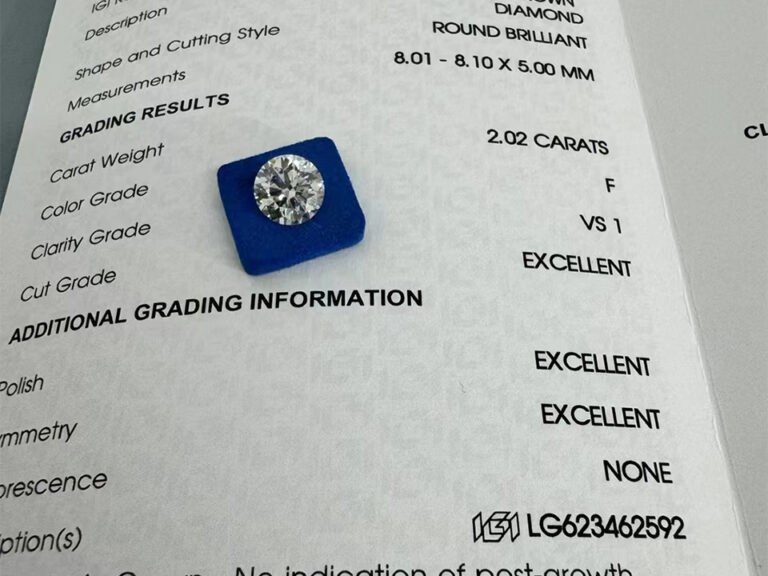
A grading report may verify whether a rock is laboratory-grown and document features such as carat weight, shade and clarity. It does not, on its own, accredit the values of the factory, energy supply or fashion jewelry maker.
There is currently a more pertinent company requirement. The RJC Research Laboratory Grown Product Criterion, or LGMS, covers moral, social, human-rights and environmental practices for firms managing lab-grown materials. It has 28 provisions and applies across production, reducing, trading, manufacturing, retail and related services. For commercial RJC participants handling laboratory-grown materials, LGMS certification is compulsory.
Still, range victories.
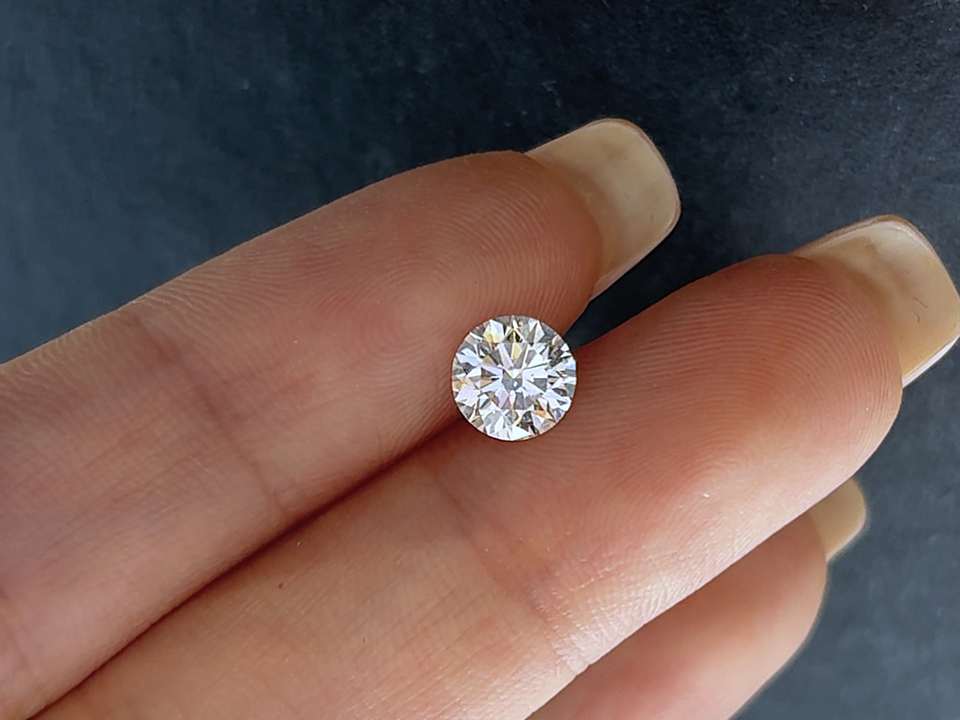
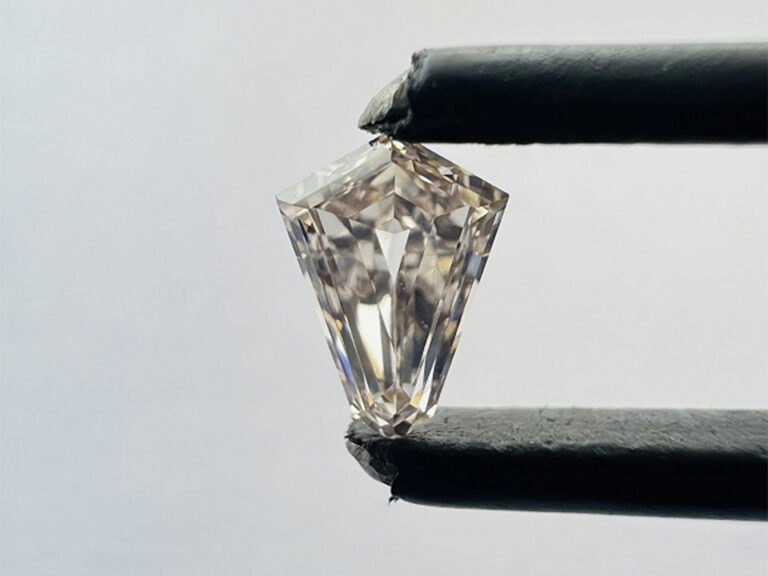
For a loose component such as a heart-shaped lab-grown ruby for jewelry production, a serious customer must request the growth-method disclosure, creating entity, grading documents, set identity and factory accreditations.
For a finished marquise lab-grown ruby pendant with an 18K gold-tone finish, the steel insurance claim requires equivalent focus. “18K gold tone” or “18K gold plated” describes a finish; it needs to not be confused with a solid 18K, or 750-fineness, gold thing.
What the 2024 Enforcement Instances Inform Customers
The compliance threats are not academic.
In December 2024, the United States and UK announced assents aimed at immoral gold networks. British authorities claimed one approved person had purchased more than US$ 300 million in Russian gold, while the united state activity described a network spanning jurisdictions including the United Arab Emirates, Singapore and Kyrgyzstan.
That instance provides three lessons.
Initially, gold’s fungibility is a laundering advantage. When product is improved, alloyed or combined, a physical assessment can not reveal its initial mine or trading course.
Second, country-of-export is not necessarily country-of-origin. Transmitting a delivery through a reputable trading facility does not cleanse the upstream background.
Third, distributor affirmations without transaction screening are weak. A buyer must analyze assents evaluating, advantageous ownership, refinery identity, billings, transport documents and material affirmations together.
The Russian-diamond instance created a similar result. Reuters reported that Antwerp dealers experienced costly hold-ups after the March 2024 constraints, while market individuals argued over where beginning verification ought to take place and exactly how downstream controls can be escaped.
The tough truth is easy: traceability ends up being expensive exactly where it comes to be meaningful.
How to Confirm Honest Jewelry Sourcing: The Eight-Document Examination
I would not accept an honest sourcing case till the provider can respond to 8 concerns with records rather than adjectives.
1. What is the certification number? A logo, brochure or sustainability web page is insufficient.
2. Which lawful entity is licensed? Contrast the certification name with the name on the quote, billing and order.
3. Which facilities remain in range? Confirm whether spreading, plating, cutting, polishing and rock setting are included or contracted out.
4. Which materials are covered? Gold, recycled gold, silver, platinum-group steels, natural diamonds and lab-grown materials might fall under different standards.
5. Which typical and variation apply? “RJC certified” is insufficient. Ask whether the evidence issues COP, CoC or LGMS and tape-record the standard year.
6. Is the certification current? Check issuance, expiry, monitoring requirements, suspension notices and range adjustments.
7. Where is the deal evidence? Request billings, transfer files, eligible-material affirmations, set numbers, rating reports and beginning declarations.
8. Can the records be mapped to the SKU? A provider may have certified product without using it in your order. Need an expense of materials or production-lot record linking the evidence to the ended up product.
Licensed artisanal and small-scale mine, mining practices, traceability and costs
High when transaction-backed
Miner impact and recorded licensed gold
Minimal supply; downstream documents still called for
Fairtrade Gold Qualification
Certified artisanal mining companies, criteria and US$ 2,000/ kg costs
High when product-linked
Social premium and accredited ASM gold
A logo does not verify the gold got in a certain SKU
RJC Chain of Guardianship
Qualified Au, Ag and platinum-group steel moves via licensed entities
Medium to high
Precious-metal chain-of-custody claims
Volunteer and based on the precise qualified range
RJC Code of Practices
Business systems for values, labor, civils rights, atmosphere and sourcing
Low at SKU degree
Vendor qualification and management-system testing
Not automatically an item passport
RJC Laboratory Grown Product Requirement
Firms taking care of lab-grown products across production and trade
Medium
Business-practice controls for lab-grown supply chains
Firm qualification still requires product mapping
Kimberley Process Qualification Scheme
Import and export controls for rough diamonds under a narrow dispute definition
Reduced
Standard rough-diamond lawful compliance
Does not develop total human-rights or mine-to-retail traceability
Gemological grading record
Rock identity and high quality characteristics
None for sourcing principles
Item disclosure and high quality confirmation
It is not an ethical sourcing accreditation
ISO 14001 or similar monitoring accreditation
Ecological administration system
None on its own
Evidence that a center has formal environmental controls
Does not show material origin or liable mining
Often Asked Inquiries
What are moral jewelry qualifications?
Honest precious jewelry qualifications are third-party requirements that examine specified components of a precious jewelry supply chain, such as mining conditions, civils rights controls, ecological techniques, recycled-content audit, or material traceability; they do not automatically prove that every stone, gram of steel, factory, and finished item fulfills the very same needs.
The most effective moral fashion jewelry certifications disclose exactly that was investigated, which facilities and products were covered, when the audit took place and exactly how customers can validate the certificate. Product-specific deal files stay required whenever a vendor declares traceability.
Is RJC qualification sufficient to verify jewelry is ethically sourced?
RJC qualification is a company-level guarantee framework covering organization ethics, labor, human rights, ecological monitoring, and liable sourcing, while RJC Chain of Custodianship is the different, volunteer common intended to record eligible precious-metal circulations via certified entities; for that reason, an RJC participant logo alone is not product-level evidence.
Request the certificate extent. Establish whether the insurance claim problems police, CoC or LGMS, after that link the relevant certificate to the manufacturing facility, product batch and completed product.
Does the Kimberley Refine assure an ethical ruby?
The Kimberley Refine is a government-run certification system for international deliveries of rough rubies that deals with stones utilized by rebel movements to fund armed problem versus legit governments, however it does not certify polished diamonds, mine-level labor problems, ecological efficiency, or the absence of misuse by state or exclusive actors.
It remains a vital legal control. It ought to be supplemented with provider due diligence, assents evaluating, beginning records, human-rights analyses and chain-of-custody proof.
Are lab-grown diamonds instantly moral?
Lab-grown diamonds are rubies created by chemical vapor deposition or high-pressure high-temperature processes, however their lab beginning does not on its own confirm eco-friendly electrical power, worker protections, carbon bookkeeping, chemical handling, metal provenance, or factory practices; rating records establish treasure qualities and disclosure, not a full moral sourcing claim.
Request the generating manufacturing facility, development technique, rating report, energy and exhausts evidence, cutting facility, RJC LGMS condition where suitable and documents for the gold or platinum made use of in the setup.
How do I verify ethical precious jewelry sourcing?
To validate ethical precious jewelry sourcing, request the specific certificate, certificate number, licensed legal entity, center extent, product extent, audit days, purchase or transfer records, origin data, and existing credibility, after that validate that those documents match the specific rock, steel batch, manufacturing facility, and finished SKU you are buying.
Confirm certificates individually and preserve the evidence with the order. A responsible case should survive team turnover, distributor modifications, governing testimonial and a skeptical client asking, “Program me.”
Quit Acquiring the Logo. Purchase the Proof.
Ethical sourcing ought to be visible in the documents prior to it shows up in the marketing.
Ask providers for certifications, extents, deal documents and SKU mapping throughout quote– not after production is completed. Define approved criteria in the order. Define which declares might show up on product packaging. Require notification when a refinery, rock manufacturer, subcontractor or certified center changes.
Then examine the file.
Because the most effective ethical precious jewelry certifications do not eliminate due diligence. They make major due persistance possible.