Looking for a reliable jewelry manufacturer for your next collection? Sunsmerald Jewelry specializes in custom jewelry design, wholesale production, and professional manufacturing solutions for global brands, retailers, and distributors. Share your jewelry requirements with us, including product styles, materials, gemstone preferences, order quantities, and delivery expectations.
Building Traceability for Lab-Grown Diamonds, End-to-End
A laboratory report, a QR code, and a sustainability declaration might look convincing on a product page, yet none of them confirms much when the physical diamond can be switched over, its certificate number replicated, or its production information edited by an unknown supplier numerous steps upstream.
So exactly what are purchasers confirming?
That question sits at the center of lab-grown diamond traceability. And, in my sight, a lot of the fashion jewelry market is answering it in reverse.
Business start with consumer-facing modern technology: blockchain pages, digital passports, glossy origin tales. They should start with identity control inside the factory. An electronic record serves just after the business can prove that Rock A stayed Stone A with development, extraction, planning, reducing, grading, establishing, delivery, and sale.
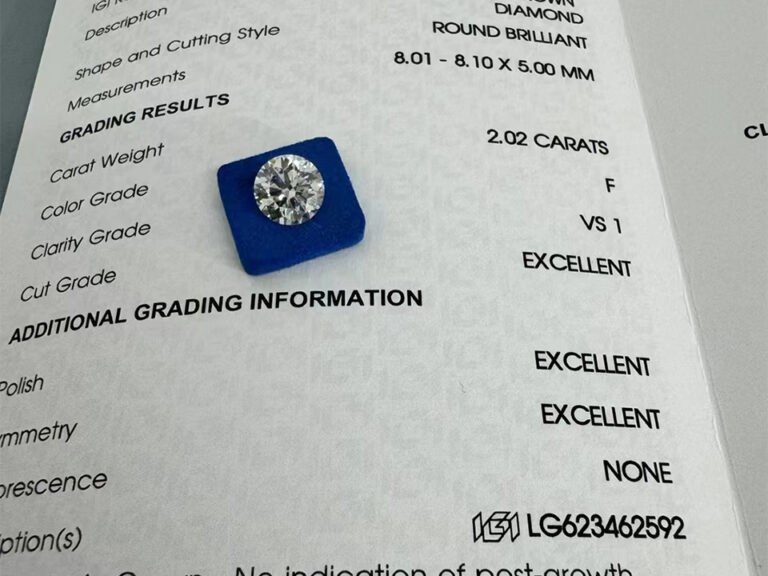
This is not academic. In January 2024, GIA presented a same-day inscription-verification service after receiving records of laboratory-grown diamonds lugging fraudulent engravings and being reduced to appear like all-natural diamonds linked to real GIA reports. That event subjected the weak point clearly: genuine info can still be attached to the wrong physical item.
The hard reality? A lot of traceability failures are identity failures using software program.
Why Lab-Grown Diamond Traceability Has End Up Being a Business Need
The lab-grown sector is broadening while its cases are being wondered about more strongly.
Associated Press reported in February 2024 that United States lab-grown diamond sales increased 16% in 2023. The exact same report estimated lab-grown rocks stood for about 5% to 6% of the global ruby market, while keeping in mind that environmental insurance claims commonly did not have clear production and energy data.
Development brings in examination.
Sellers now need to distinguish at least 4 different claims:
The rock is a diamond instead of moissanite or cubic zirconia.
The ruby is laboratory-grown as opposed to mined.
The specified CVD or HPHT manufacturing technique is exact.
Any power, carbon, labor, country-of-production, or recycled-material declaration is backed by evidence.
The USA Federal Trade Commission expects marketing experts to recognize laboratory-created rubies clearly and prevent summaries that could lead customers to think they are getting mined stones. Calling a laboratory-created product merely a “ruby,” without an instant qualifier, can create a deceitful perception.
That makes artificial diamond traceability greater than an operations task. It impacts item descriptions, billings, certificates, product packaging, advertisements, marketplace feeds, customs documents, and customer-service scripts.
One irregular field can spread all over.
Traceability Is Not the Like Provenance
The terms are frequently blended together, which causes poor system design.
Traceability records what took place to a product and when.
Provenance defines where a thing came from and the evidence supporting its origin.
Chain of protection identifies who regulated the thing at each phase.
Authentication examinations whether the physical item matches its claimed identity.
A firm can have provenance without full traceability. It may know the farmer and manufacturing nation however have no record of which cutter handled the harsh crystal.
It can likewise have traceability without reliable provenance. A system might tape every shipment perfectly while starting with false cultivator information.
End-to-end diamond traceability requires all 4 layers. Miss one, and the story can collapse under audit.
Begin the Document Inside the Growth Facility
A functional chain ought to begin prior to the harsh diamond leaves the reactor division.
Lab-grown diamonds consist mostly of carbon, C, but the manufacturing routes are materially various. Chemical vapor deposition, or CVD, commonly makes use of carbon-bearing gases such as methane, CH FOUR, with hydrogen, H ₂. High-pressure, high-temperature production, or HPHT, uses pressure and warmth to duplicate problems associated with ruby development.
GIA identifies CVD and HPHT as the two major laboratory-growth processes and utilizes innovative logical techniques to determine laboratory-grown product and its characteristics.
For every reactor run, the cultivator must capture:
An unique reactor-run identifier
Facility and activator identity
Growth technique: CVD or HPHT
Seed-plate identifier and vendor
Beginning and conclusion timestamps
Driver or authorized manufacturing team
Input-gas or growth-material lot references
Post-growth therapy condition
Rough crystal weight
Images prior to and after removal
Quality-control outcomes
Energy resource and meter evidence when ecological insurance claims are made
I would not position every process criterion on a customer web page. That would expose commercially delicate manufacturing data and welcome false impression.
Yet the information should exist. Accessibility can be layered: public, buyer-only, auditor-only, and manufacturer-confidential.
No document, no insurance claim.
Give Every Stone a Persistent Digital Identification
A reactor set is not nearly enough as soon as a rough crystal is split.
The system needs to create a parent-child relationship:
Reactor Run → Rough Crystal → Planned Segments → Refined Rocks → Precious Jewelry Parts → Finished SKU
Intend harsh crystal RC-240918-017 produces three polished diamonds. Each polished rock needs its own identifier while retaining a web link to the parent crystal.
Managed opening up treatments: Product packaging is opened under cam insurance coverage or dual consent.
Post-setting verification: The stone identity is reconfirmed after mounting where practically possible.
The difference in between ruby, moissanite, and cubic zirconia should remain specific throughout the magazine. For example, princess-cut moissanite stud jewelry in 925 silver ought to never ever acquire ruby terms simply due to the fact that the product rests near a lab-grown ruby category.
Product confusion is not a small catalog mistake. It is proof that the identity model is broken.
Tape Events, Not Just Documents
Weak systems store folders.
Solid systems save events.
A check of a billing informs us a file existed. It does not automatically tell us which stones relocated, which quantity was approved, whether weight altered, or whether the recipient reported an exception.
Each occasion must answer five questions:
What object or set was included?
When did the event take place?
Where did it take place?
That carried out or authorized it?
Why did the state or custody change?
GS1’s EPCIS 2.0 common gives a beneficial version for sharing event-based supply-chain details, consisting of the place, status, motion, and service context of items. It was not produced especially for rubies, but its occasion logic is much more interoperable than developing another closed jewelry data source.
For a polished rock, a traceability series could read:
Seal Broken → Weight Inequality → Inscription Unreadable → Record Conflict → Rock Declined → Returned
A system that records just successful occasions is an advertising archive, not an investigatory document.
End-to-End Ruby Traceability Control Table
Supply-Chain Phase
Required Identification
Evidence to Catch
Common Failing
Recommended Control
Seed and growth
Seed ID and reactor-run ID
Supplier whole lot, reactor, timestamps, process type
Unproven seed or blended production records
Approved suppliers and secured run documents
Harsh removal
Rough-crystal ID
Weight, dimensions, images, operator
Crystals combined after extraction
Immediate serialization and sealed storage
Planning and sawing
Parent-child stone IDs
Planning file, segment map, yield records
Youngster stones lose parent web link
Automated ID inheritance
Reducing and polishing
Person or set ID
Weight modifications, workstation, dates
Stone alternative or mixing
Regulated trays and dual-count handoffs
Research laboratory grading
Rock ID and report number
Record, inscription picture, grading information
Authentic report paired with another stone
Inscription and dimension verification
Precious jewelry setup
Stone ID connected to SKU
Setting order, setter, before-and-after images
Right stone designated to incorrect product
Scan-to-set workflow
Finished-goods QC
Completed SKU and element IDs
Metal examination, rock examination, weight, photos
Moissanite or zircon identified as diamond
Independent material confirmation
Circulation
Bundle and delivery IDs
Seal number, sender, recipient, timestamps
Repacking without a trace
Meddle proof and invoice confirmation
Retail and resale
Consumer-facing item ID
Disclosure, warranty, possession transfer
Item page varies from manufacturing facility record
Managed information posting
The table looks step-by-step because traceability is step-by-step.
That is the point.
Blockchain Can Shield Records, however It Can not Create Truth
I am doubtful whenever a vendor leads with blockchain prior to explaining rock identification.
Blockchain ruby traceability can aid make picked records tamper-evident, share data amongst companies that do not share one data source, and timestamp guardianship events. It may likewise allow individuals validate that a paper hash has actually not altered.
Yet trash ends up being long-term garbage.
If a provider enters the incorrect production country, the ledger maintains the wrong country. If an employee scans the ideal certificate and packs the wrong stone, the journal protects a tidy electronic background for a physical inequality.
Use blockchain where a number of independent events require shared verification. Do not utilize it as ornamental proof.
For document-integrity checks, a cryptographic absorb such as SHA-256 can spot whether a kept file has actually changed because a modified data creates a different absorb. NIST specifies SHA-256 within the SHA-2 household for message-digest generation and stability checking.
That safeguards the documents.
It does not verify the claim inside it.
Regulatory Pressure Reveals Where the Market Is Heading
The G7 ruby assents program offers a beneficial criterion, despite the fact that a lot of its certification framework problems natural diamonds and Russian origin as opposed to ordinary lab-grown retail cases.
A direct G7 restriction on Russian-origin diamonds started on January 1, 2024. Constraints covering Russian diamonds processed in 3rd nations adhered to on March 1, 2024, when the first qualification node with the ability of issuing G7 beginning certificates additionally came to be functional in the European Union.
The lesson for lab-grown businesses is not that the same accreditation routine immediately relates to every artificial stone.
The lesson is that federal governments now anticipate diamond-origin controls to function throughout borders, processors, and middlemans. In November 2024, G7 technological teams and Botswana were already dealing with export-certification ability and supply-chain transparency.
Traceability is moving from brand name narration toward profession infrastructure.
Smart suppliers need to prepare now rather than wait on a merchant, market, financial institution, insurer, or regulatory authority to demand documents on an impossible deadline.
Separate Item Identity From Marketing Language
The traceability data source should utilize controlled terms, not improvised sales duplicate.
At minimum, produce different master-data worths for:
Laboratory-grown ruby
All-natural diamond
Moissanite
Cubic zirconia
Other artificial gemstone
Natural tinted gemstone
Unknown or pending verification
Then develop different fields for:
Rock varieties
Origin type
Development method
Treatment
Certification laboratory
Report number
Steel composition
Plating material
Layering thickness
Country of production
Country of cutting
Country of fashion jewelry setting up
This avoids an item such as a gold-plated pear-cut zircon wedding ring from unintentionally entering a lab-grown diamond feed due to the fact that a worker used “diamond-style” as a merchandising expression.
Databases take words essentially.
Consumers do as well.
Building Traceability for Lab-Grown Diamonds, End-to-End
A 90-Day Implementation Strategy That Can Endure an Audit
Days 1– 15: Map the Actual Supply Chain
Checklist every farmer, cutter, grading laboratory, establishing workshop, consolidator, logistics provider, storehouse, and reseller.
Do not map the ideal process. Map the actual one, consisting of spreadsheets, WhatsApp approvals, transcribed tray cards, repacking factors, and subcontractors nobody mentions during sales conferences.
Those casual actions are where identity goes away.
Days 16– 30: Specify the Minimum Data Establish
Choose necessary information fields for reactor runs, harsh crystals, sleek rocks, fashion jewelry elements, finished SKUs, shipments, and returns.
Designate data possession. The grower possesses development documents. The cutter has transformation documents. The lab has grading outcomes. The fashion jewelry maker possesses element allowance and setup records.
No shared area needs to exist without a named issuer.
Days 31– 45: Develop Physical Controls
Select laser inscriptions, imaging, sealed trays, tamper-evident bags, scanning terminals, test instruments, and exception procedures.
Specify limits. A 0.01-carat melee rock might make use of controlled-batch traceability. A 2.00-carat center stone should normally get one-to-one documents and stronger authentication.
Risk should establish control depth.
Days 46– 60: Develop Occasion Capture
Attach manufacturing orders, stone IDs, rating reports, component allotment, quality assurance, product packaging, and delivery events.
Use APIs where quantity validates them. Usage controlled imports where it does not.
A tidy CSV with validation beats a poorly set up blockchain.
Days 61– 75: Check the Weakest Circumstances
Run alternative drills.
Exchange two stones of comparable weight. Replicate a certificate number. Damage a seal. Change a PDF. Return a finished item without its packaging. Ask the system whether it detects each event.
The majority of business test the pleased path. Auditors and fraudsters do not.
Days 76– 90: Release a Restricted Customer Key
Program info the purchaser can recognize:
Lab-grown standing
CVD or HPHT approach where confirmed
Stone or batch identification
Carat weight and rating information
Fashion jewelry material
Manufacturing locations
Verification day
Applicable record number
Treatment, warranty, and return records
Do not publish manufacturing facility secrets simply to make the passport appearance detailed. Accuracy beats volume.
Exactly how to Pick the Best Lab-Grown Diamond Traceability System
The very best lab-grown ruby traceability system is not necessarily the system with the longest attribute listing.
I would score systems versus 7 tests:
Can it protect parent-child identification after a rough crystal is divided?
Can it identify individual-stone and batch-level traceability?
Can it bind records, inscriptions, images, and dimensions to one identity?
Can outside labs and distributors submit authorized events?
Can it videotape adjustments without removing the previous record?
Can auditors export the full chain in a useful style?
Can customer gain access to be separated from confidential supplier data?
And another question: can you leave?
A system that can not export organized identifications, events, add-ons, timestamps, and signatures creates supplier dependence. Traceability data need to outlive the software application contract.
Often Asked Questions
What is lab-grown diamond traceability?
Lab-grown ruby traceability is a recorded system that designates a persistent identity to a produced ruby and videotapes its development, reducing, rating, establishing, guardianship transfers, and last sale so an accredited party can validate what the rock is, where it moved, and which proof supports each case.
A complete system consists of physical identification, structured occasion data, confirmed documents, regulated terminology, exemption documents, and accessibility permissions. A certificate alone covers only part of that chain.
How do you trace lab-grown rubies from manufacturing to retail?
To trace a lab-grown ruby end to end, a service needs to develop an unique rock or batch identity at growth, bind that identification to physical pens and lab records, capture every improvement and safekeeping occasion, and preserve signed evidence via cutting, grading, jewelry setting up, circulation, and retail.
Bigger stones typically validate private serialization, while little melee might be taken care of via controlled batches, secured containers, weight settlement, and production-order appropriation.
Is blockchain essential for diamond provenance monitoring?
Blockchain diamond traceability is an approach of securing chosen supply-chain occasions and document hashes to a common journal, however it does not individually verify that a physical rock matches the digital document; that evidence still relies on examination, managed handoffs, laser engravings, imaging, screening, and liable information companies.
A standard data source can support strong traceability when one company manages the chain. Shared ledgers come to be more useful when several independent celebrations need to validate events without giving one individual complete authority.
What is the very best lab-grown diamond traceability system?
The very best lab-grown ruby traceability system is the one that dependably binds each stone to confirmed evidence, sustains interoperable occasion information, divides lab-grown rubies from moissanite and cubic zirconia, survives audits and remembers, and gives customers a usable verification sight without revealing confidential factory or supplier data.
Customers should evaluate exportability, accessibility controls, correction backgrounds, distributor onboarding, parent-child records, inscription verification, batch settlement, and integration with product-information systems prior to authorizing an agreement.
What is a lab-grown ruby chain of wardship?
A lab-grown diamond chain of guardianship is the sequential record of every organization or managed area that obtains, transforms, shops, ships, collections, or markets a rock, consisting of timestamps, amounts, liable celebrations, handoff evidence, exemptions, and the identifiers attaching the physical ruby to its electronic history.
A safekeeping record should not simply state that a provider handled the rock. It should document when duty moved, what was obtained, whether the seal and measurements matched, and that accepted any kind of inconsistency.
Construct Proof Before You Develop the Tale
Traceability needs to begin with one production line, one distributor team, and one plainly defined fashion jewelry collection.
Map it. Serialize it. Attempt to damage it.
Then release the evidence buyers actually require.
That series is less glamorous than launching a blockchain passport throughout a whole directory, yet it creates something far more useful: a lab-grown ruby supply chain whose insurance claims can be tested, challenged, remedied, and relied on.