Looking for a reliable jewelry manufacturer for your next collection? Sunsmerald Jewelry specializes in custom jewelry design, wholesale production, and professional manufacturing solutions for global brands, retailers, and distributors. Share your jewelry requirements with us, including product styles, materials, gemstone preferences, order quantities, and delivery expectations.
Cutting Strategy for CVD Stones with Growth Lines and Strain
When you sit in front of a CVD stone riddled with development lines and strain bands, you’re not simply enhancing luster; you’re deciding whether that crystal ends up being a high-margin fashion jewelry piece or an unsaleable, unclear turn down hidden in supply reports. In my experience, cutters who deal with strain as “just another incorporation” end up with stones that look penalty under 10 ×, just to show haze and unequal light at regular viewing ranges– and that’s where clients quietly walk away.
So why do so several workshops still pretend development lines are a minor annoyance instead of a structural trouble?
What “Development Lines and Stress” Really Mean in CVD
Growth lines in CVD rubies are the physical footprints of layer-by-layer deposition, usually straightened along the development axis and loaded with side dislocations that distort the latticework. These misplacements cause anomalous birefringence, which is a means of saying your apparently best crystal bends light in directions you really did not prepare for, generating that infamous “unclear” appearance in specific viewing geometries.
I have actually viewed more than one manufacturing facility in Shenzhen and Surat blame color quality for monotony when the real culprit was strain-induced haze, especially in rocks expanded fast to strike Q4 quantity targets. When a market report approximates that worldwide CVD ruby production exceeded 6 million carats in 2023, with more than 53% used in non-gem applications, you can presume how many borderline rocks still get pushed right into the fashion jewelry pipe.
And the hard reality: in 2024, numerous mid-tier brand names silently moved campaigns toward HPHT positioning due to the fact that their CVD supply lugged noticeable pressure lines that QC groups could not repair with sprucing up alone.
The Core Reducing Method for CVD Stones
Great technique begins before the very first wheel touch.
For CVD stones with noticable development lines and pressure, the reducing approach focuses on 3 pillars: orientation, anxiety relief, and risk-adjusted yield. Orientation means mapping stress under cross-polarized light and straightening important facets so that pressure bundles do not rest slap generally light-return paths; cutters who avoid this action are betting with every structure decision.
Stress alleviation is where viewpoints diverge, however I have actually seen workshops intentionally give up 5– 10% return by cutting high-strain fields, trading carats for cleaner optics, specifically for engagement-grade items over 1.00 ct. Yield, of course, is the fight: monitoring wants maximum weight retention, while anybody who’s really sat at the bench knows that saving 0.06 ct at the price of noticeable fuzz is a lasting online reputation hit, not a win.
So the real reducing approach is less regarding chasing academic suitable proportions and more regarding matching facet style to the real, flawed crystal before you.
Mapping Growth Lines Prior To You Cut
First, decrease.
We begin with stress mapping due to the fact that cutting blind into a CVD stone is the fastest method to convert a possibly high-value crystal into price cut supply. Under cross-polarized light, CVD rocks show distinct stress patterns; packages of dislocations appear as vibrant fringes or straight bands, and their orientation informs you specifically which instructions you ought to not send out major rays of light with.
From there, we integrate tiny growth-line inspection with basic incorporation plotting, dealing with growth lines and pressure zones as “dynamic issues” that interact with aspect style instead of static imperfections you just avoid by eye. I have actually had junior cutters suggest that strain “does not show in the grading record,” which is true sufficient; yet when a rock looks blurry at arm’s length, the rating paper won’t save the sale.
This is where most shops fail: they treat CVD strain as a QC interest, not a primary input to the reducing layout process.
Alignment, Facet Layout, and Light Efficiency
Geometry is ruthless.
To get appropriate efficiency out of a stretched CVD rock, we concentrate on element positioning relative to both development instructions and strain packages. If a strain band goes across the central region of the stone, you do not simply reduce a standard 57-facet round dazzling and hope for the very best; you readjust table size, crown angles, and pavilion deepness to steer primary light-return courses far from that band.
Sometimes, this suggests deliberately cutting a slightly smaller table to restrict the strain impact to edge scintillation as opposed to central brightness, or changing structure mains to redistribute leakage areas. Much of the CVD diamond cutting strategies that in fact work in manufacturing look “wrong” to purists who praise perfect Tolkowsky percentages but fail to remember those were acquired assuming fairly homogeneous material.
And of course, some stones are fundamentally aggressive product: no amount of clever facet style will completely remove deep, complex stress, and the honest thing to do is downgrade them into fashion jewelry as opposed to flagship bridal pieces.
Strain-Induced Birefringence: Why Some CVD Stones Look “Blurry”
This matters greater than individuals admit.
The anomalous birefringence in CVD rocks with heavy pressure bends different wavelengths differently, properly smearing the crisp return you expect from a well-cut ruby. In technique, that indicates your numerical ray-tracing on an “optimal” lattice stops working once the genuine crystal begins turning light inside dislocation-rich development fields.
I’ve seen cutters criticize brightening issues wherefore is plainly strain-induced fuzziness, endlessly re-polishing elements and over-thinning girdles instead of acknowledging that the underlying CVD development was rushed. When an education and learning overview explicitly advises customers to prevent CVD diamonds with visible strain lines since they often tend to look blurry, that’s not marketing hype; it’s collected market pain codified into careful purchasing criteria.
If your reducing method doesn’t deal with stress administration as a first-class style parameter, you’re dealing with obsolete presumptions about lab-grown diamonds.
Yield vs Quality: The Financial Truth from 2023– 2024
Cash drives decisions.
In 2023, worldwide CVD diamond production passed 6 million carat weights, yet over half of that entered into non-gem uses, which tells you how much material fails aesthetic thresholds in practice. Also amongst gem-quality stones, internal benchmarking at a number of makers I’ve consulted with programs that a solid share of CVD outcome shows strain patterns major enough to require either downgraded cuts or devalued product positioning.
On the market side, valuations in 2024 show that premium-grade CVD stones can still command solid margins– however just when they prevent the noticeable stress issues that on the internet purchasers increasingly recognize from education web content and user-shared contrast clips. A shop that insists on squeezing every last factor of carat weight out of troublesome material will find itself marketing discounted supply on markets while rivals silently build brand names around “strain-screened” CVD.
So the reducing approach is never simply optical; it is a portfolio choice infiltrated carat weight recovery, brand name promises, and the growing proficiency of customers who understand how to analyze pressure lines.
Incorporating Reducing Strategy with Finished Fashion Jewelry Design
Right here’s where it gets real for brands.
We do not reduce CVD rocks in a vacuum; we cut for specific setups, cost points, and brand name stories. If I know a stretched stone is heading into a minimalist 18K lab-grown ruby anklet, I can accept slightly reduced central sparkle due to the fact that the piece will reside in motion, under softer lights, and be gotten more for aesthetic vibe than laboratory report excellence– a context where a minimalist 18k gold lab grown ruby anklet can still beam as a value-forward item.
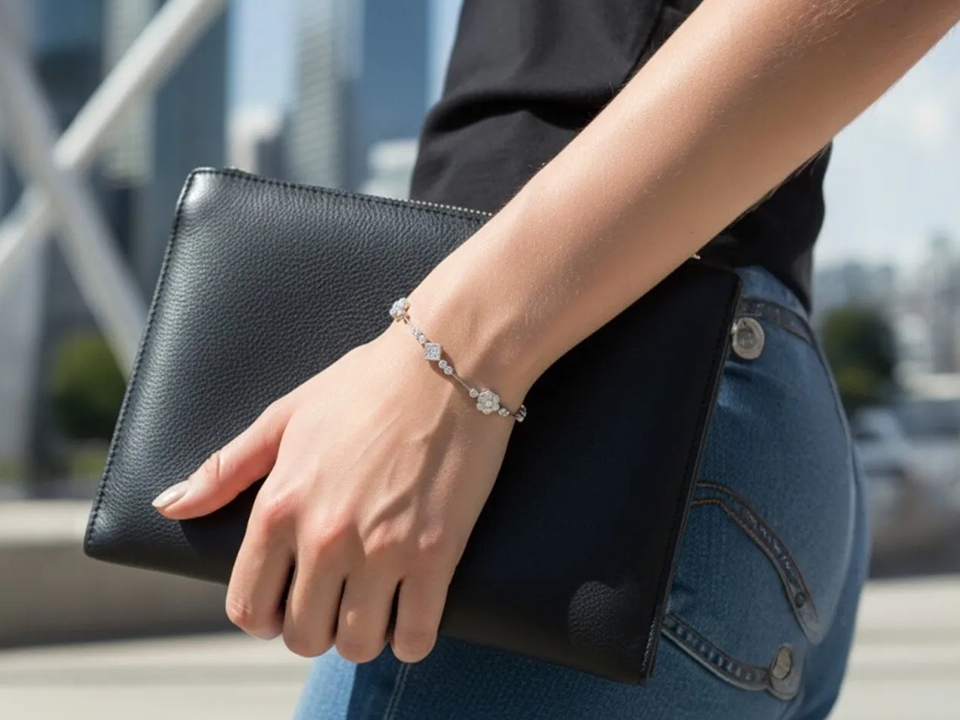
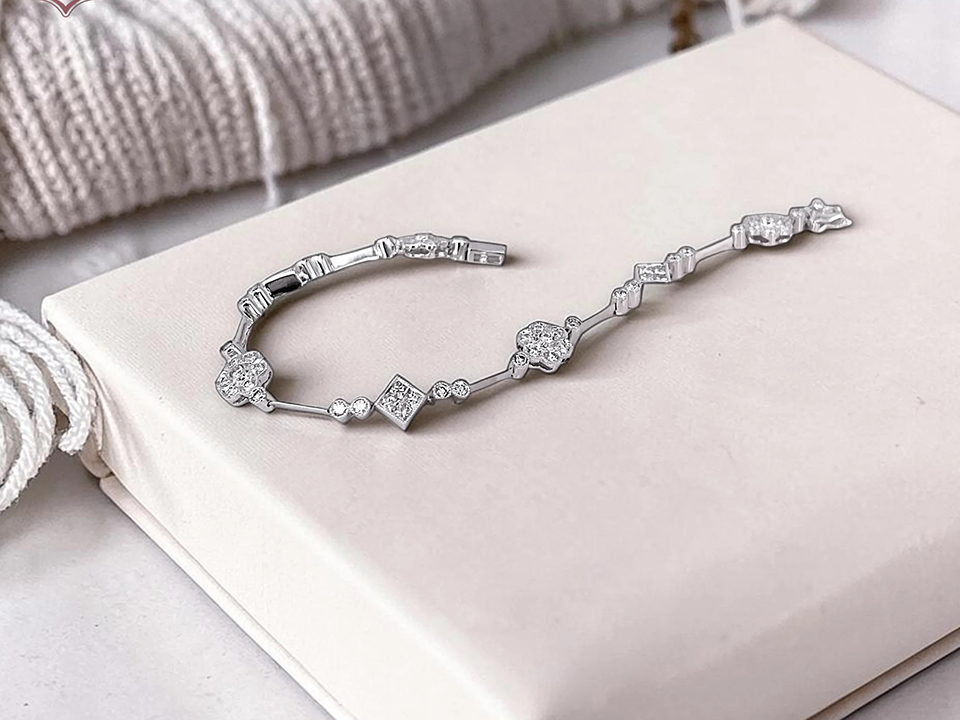
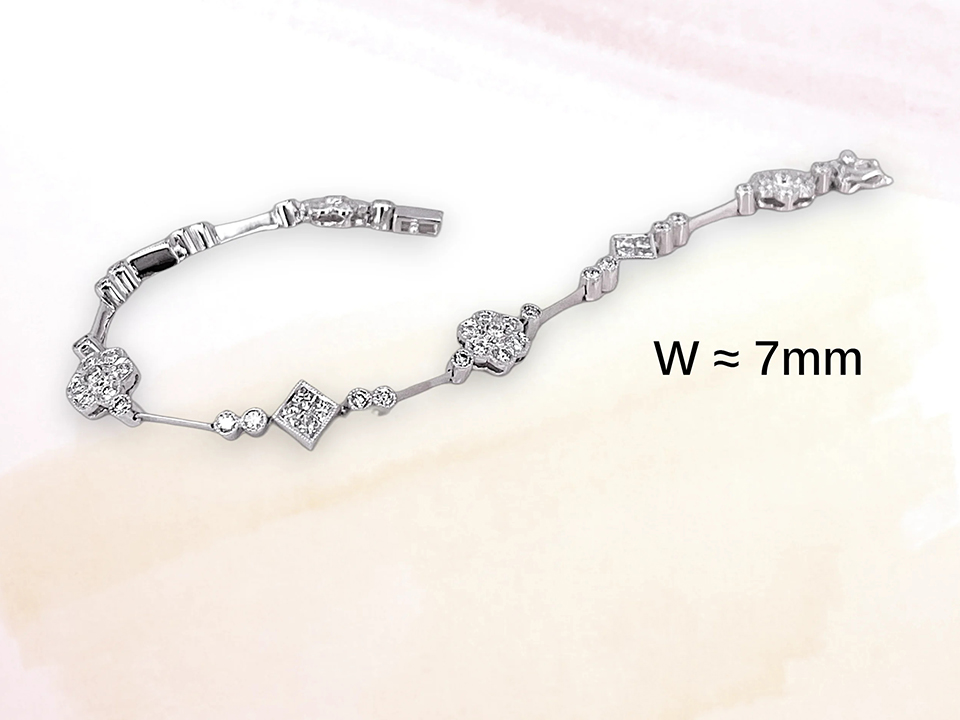
By contrast, a CVD rock selected for an 18K gold oval D-color wedding ring requires a more stringent cutting technique: below we strongly trim strained growth fields, approve lowered yield, and orient elements to safeguard the high-contrast shimmer that buyers expect from a premium classic lab expanded ruby wedding ring. The same logic puts on statement wrists– if we’re making a high-end arm band around a pear-cut laboratory diamond, we precisely position the cleanest CVD stones where light direct exposure is highest possible, and assign even more strained rocks to additional settings in a pear cut deluxe arm band.
And for party fashion jewelry in white gold tones, we occasionally use slightly more flexible cutting strategies that focus on face-up dimension and glimmer in dynamic lighting, incorporating CVD stones that may fail more stringent wedding requirements but still look magnificent in a white gold tone ruby party collection.
Practical Process: Just How to Cut CVD Stones with Growth Lines and Stress
We can’t pretend this is academic.
In a real workshop, a cutting method for CVD stones with development lines and stress generally complies with a repeatable workflow: pre-screen under polarized light, paper stress alignment, define danger industries, and after that style aspects to course key sparkle with cleaner volumes. The pre-screen action remove rocks where strain is so pervasive that any kind of attempt at state-of-the-art cutting would certainly be economic self-sabotage. loosegrowndiamond
Next, cutters use changed percentage sets that are tuned for strained CVD as opposed to idyllic all-natural diamonds, in some cases changing crown height and pavilion depth to balance leak against strain presence. When essential, we integrate targeted sprucing up and cleaving relocate to chill stress accumulation and protect against unanticipated chipping along strain bands, which can otherwise ruin hours of operate in secs.
The uneasy fact is that numerous cutters still use the same template to HPHT and CVD material, overlooking the truth that CVD’s layer-based growth leaves a different failure profile that demands a customized technique.
Table: Key Cutting Levers for Strained CVD Stones
Cutting Bar
What It Provides For Stretched CVD Stones
Common Compromise
Pressure mapping under polarization
Identifies high-risk growth lines and birefringent areas before reducing
Includes evaluation time and requires training, however saves miscuts.
Positioning to development axis
Aligns aspects to decrease light via stress bundles
May decrease ideal balance or standard percentage targets.
Careful cutting of stress sectors
Removes the worst areas to enhance face-up optics
Cuts carat weight return, affecting temporary income per stone.
Modified crown/pavilion percentages
Rearranges radiance far from strained volumes
Deviates from “excellent” specs; some perfectionists withstand the appearance.
Targeted polishing and cleaving
Decreases stress focus and breaking risk in strained locations
Longer bench time, greater labor expense per finished stone.
Frequently Asked Questions: Cutting Method for CVD Stones with Growth Lines and Strain
How do you cut CVD rocks with development lines and stress without shedding efficiency?
You reduced CVD rocks with growth lines and stress by first mapping pressure patterns under cross-polarized light, after that orienting aspects to course significant light courses with the cleanest parts of the crystal while uniquely cutting high-strain industries that create fuzzy optics, even if that minimizes carat weight yield. In practice, I combine strain mapping with customized proportion establishes made for CVD, after that choose ahead of time whether a stone is fit for bridal, fashion, or non-jewelry usage based upon the severity of interior tension.
What are the best cutting approaches for CVD diamonds with visible strain lines?
The most effective cutting approaches for CVD diamonds with noticeable pressure lines count on strain-aware preparation: cross-polarized assessment, growth-axis positioning, and element design that intentionally stays clear of sending main light with strain packages that create birefringence and fuzziness. I favor somewhat smaller sized tables, very carefully tuned crown angles, and strategic trimming of the worst markets so the rock keeps sharp comparison and shimmer instead of scattered haze.
Can stress lines in CVD rubies be “cut out” totally?
Strain lines in CVD rubies rarely vanish totally; you can only decrease their optical influence by cutting one of the most afflicted fields and steering important facets far from heavily strained regions recognized in pressure mapping. In some stones, stress is so pervasive that you downgrade them for style precious jewelry rather than trying to require a high-performance cut where the underlying latticework simply won’t cooperate.
Do growth lines and stress affect long-lasting toughness of lab-grown CVD stones?
Development lines and pressure affect lasting sturdiness primarily by producing stress and anxiety focus that can increase the threat of breaking or cleavage throughout reducing, establishing, or later put on, especially near slim bands and acute edges. I have actually seen stones that looked fine in lab reports but failed under mechanical shock precisely along strain-rich bands, which is why mindful workshops incorporate pre-screening with conventional element design in those locations.
Are CVD rocks with stress still appropriate for premium fashion jewelry like bridal rings and luxury arm bands?
CVD rocks with modest, well-managed stress can definitely be suitable for premium precious jewelry when cutting technique and item positioning are lined up, specifically in pieces where lights and movement are flexible. In my very own projects, I reserve the cleanest, low-strain CVD rocks for statement wedding rings and signature bracelets, and route more stretched material into vibrant celebration jewelry where the general style, like white-gold tone sets or split anklets, matters greater than bench-test optical perfection.
So if we’re serious regarding CVD, we stop acting these stones act like flawlessly uniform natural rubies and start cutting them according to just how they in fact expand and strain in the real life.